
Search Here 
Português
Inglês
The Household Budget

Classic Credit – For the financing of goods or services acquired by an end consumer and whose credit has a fixed and predefined amortisation plan. This includes credit granted to private individuals, consumer credit and credit for businesses. 

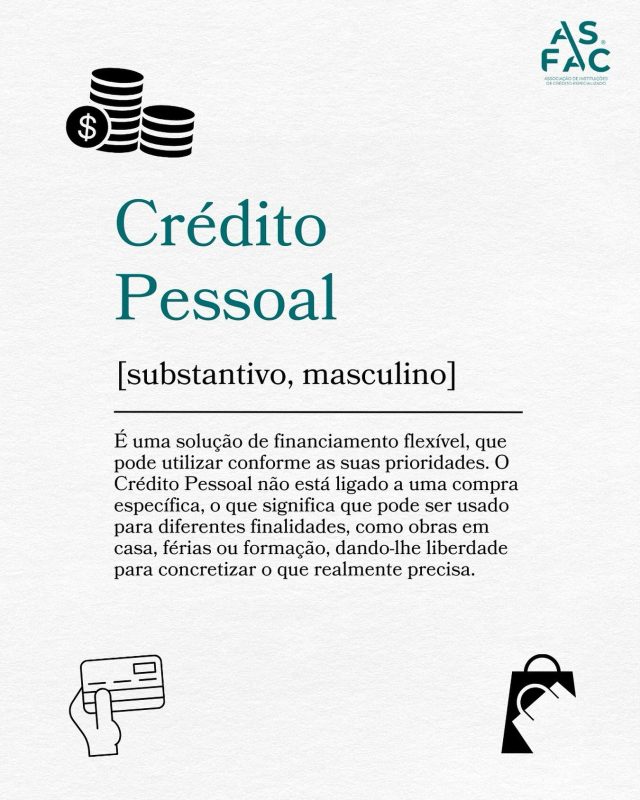
Consumer Credit – As its name implies, this is credit granted for the acquisition of goods or the provision of services. The types of credit that are considered consumer credit include credit cards, the personal credit often used to purchase furniture, vacations, computer equipment and appliances. Vehicle credit is the type of consumer credit which most Portuguese seek. A salary account is another type of consumer credit where the client can withdraw an amount equal to their net salary as an advance on their income. Interest is charged from the date the facility is used until the date on which the amount in question is repaid. Mortgages are often wrongly included in this category of credit.

In terms of financing period, consumer credit is granted for much shorter periods than mortgages. We are talking about contracts which generally last between five and six years, given that the amounts financed are never as high as with mortgages, which generally range between 25 and 30 years in duration.

In relation to the rest of Europe, it has been revealed that the Portuguese, contrary to common belief, are not those who most resort to credit. On the contrary, the Portuguese are actually extremely prudent when it comes to credit and generally comply with their financial commitments.

Revolving Credit – characterised by flexible debt amortisation plans, as well as a credit limit which may (or may not) be fully used (granted before the acquisition of the good or service), e.g.: credit cards, overdraft on a current account.

Credit Application Fees – This fee is normally charged to cover the expenses involved in processing the credit application, and may either be a fixed fee or a percentage of the financed amount. In the latter case, a fixed minimum and maximum value can be established.

Contract at a distance: Refers to any contract for financial services signed between a supplier and a consumer that is part of a system of sales or service provision at a distance. The supplier communicates exclusively at a distance until the contract is concluded.

Consumer: Any individual person who, under the terms governed by the applicable directive, acts in accordance with objectives that do not form part of their commercial or professional activity.

Creditor – The entity that, concedes credit as part of their professional activity.

Down Payment - The initial payment given as a signal of intent to pay for the rest of the vehicle. The more the down payment is, the less you will have to pay on a monthly basis. A higher initial payment could also mean you pay at a lower interest rate.

Supplier: Any individual or company who, in the course of their commercial and professional activities, provides services that are subject to contracts governed by the applicable directive, or who acts as a mediator for the provision of these services at a distance or for the conclusion of a contract between the entities at a distance.

Leasing – The same concept as financial leasing. It is a financing operation in which one party (the lessor) transfers the right to use a certain good to another party (the lessee) for an agreed period of time, in exchange for periodic payments. The lessee may acquire the good at the end of the contract period upon payment of its residual value.

Lessor – The leasing company that acquires the good intended for the client (vehicle), granting them the right to use it in exchange for a periodic payment.

Period – The duration of a loan. The longer it is, the lower the monthly payment, although more total interest will have to be paid.

Total Cost - The amount agreed upon between the dealer and the buyer, minus whatever refund or discount there might be. The dealer calculates the tax based on this amount.

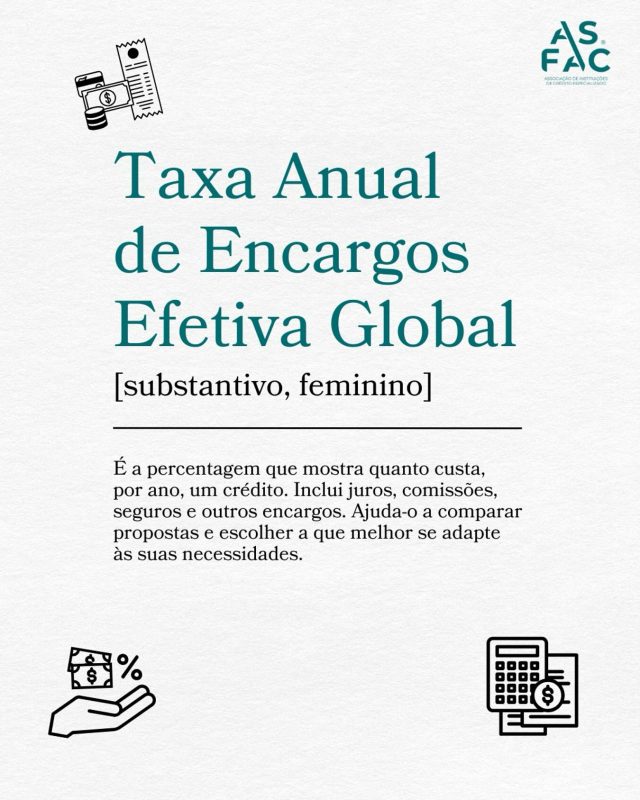
APR (Annual Percentage Rate) – APR is the total cost of credit for a consumer expressed as an annual percentage of the amount of credit granted. APR includes expenses on hedging repayments, interest payments and other compulsory charges (taxes, stamp duty, commissions and life insurance).

Nominal Annual Interest Rate (NAR) – NAR is the rate at which interest on credit is calculated. It represents the price at which financial entities loan money to their clients, not including taxes or other fees. This tax, applied to the amount financed (principal) for the contract period, produces interest which is paid along with the credit repayments.
Normally, these payments include the principal and interest such that the amount of the loan will be completely settled by the end of the contract.

Communication at a distance: Any means which precludes the physical and simultaneous presence of the supplier and consumer, and which can be used to provide a service between the two parties at a distance.

Public Indebtedness Ratio – The public indebtedness ratio is the macroeconomic indicator which measures families’ level of debt in relation to their annual income; in other words, if a family had to pay off all their debts in one year, how much that represents of what they would earn in that year. It is not an indicator for default potential nor is it to be confused with the debt-to-income ratio; rather, it is a macroeconomic indicator which measures the responsibilities associated with the private sector in the economy.

Debt-to-Income Ratio – The debt-to-income ratio is an indicator that shows the relation between the cost of servicing debt – interest and amortisation of loan(s) – and the income available in a certain period. It is what measures a private client’s capacity to comply with their financial obligations.

Default – Defaulting is the non-payment of a loan or other form of contracted debt, independent of the reasons for the default.

Over-indebtedness – This relates to the set of factors and situations that lead to the impossibility of making payments due to insufficient income.

Durable Medium: Any tool that allows the consumer to store personal information and information specifically addressed to them, namely computer disks, CD-ROM, as well as a computer hard drives that store e-mail.


Voltar / Back


Acessibilidade
Site support by Site Dinâmico
ASFAC © 2006 - All rights reserved